 |
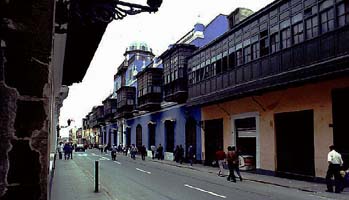
The rescue of Lima’s Historic Center is closely tied to its inclusion on the UNESCO World Cultural Heritage List. In December 1991, after years of effort by Peruvian public and private organizations, UNESCO declared the monumental area of Lima’s Historic Center a Cultural Heritage of Humanity…
EL RESCATE DEL CENTRO HISTÓRICO DE LIMA |
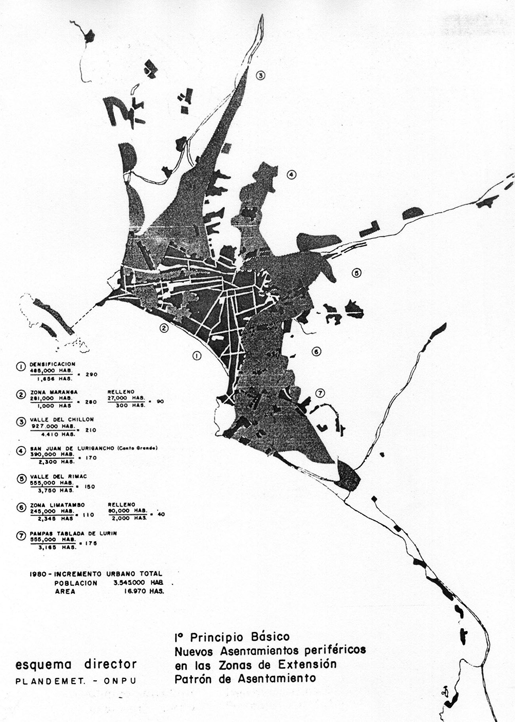 |
Urban planning emerged and developed as an operational category of the Peruvian state during the 20th century. Since then, its conceptual framework has remained relatively stable. Despite natural variations, the scope and methodological approaches of its emblematic product—the Urban Plan—have sustained, and presumably still sustain, its core normative principles. During the period under analysis, Lima’s population grew from an estimated 900,000 inhabitants in 1949 to a census population of 6,353,692 in 1993. This essay discusses three significant urban development plans for the city, formulated at three key moments during that period, in an effort to confirm their normative identity. TRES MOMENTOS Y UNA SOLA IDENTIDAD DE LA PLANIFICACIÓN URBANA DE LIMA EN EL SIGLO XX |
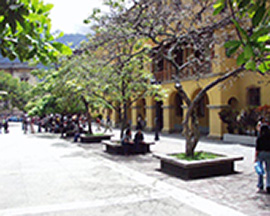 |
EL CENTRO HISTÓRICO DE MÉRIDA |