
|
A former student and dear friend encouraged me to write a few lines about my decades-long teaching experience in the area of architectural design projects. Although it may seem like a very specific topic limited to a small number of readers, it is of greater interest due to its implications for teaching other fields of knowledge where creativity plays a significant role. |
LA TEORÍA DIDÁCTICA DE LO PROYECTUAL EN LAS ESCUELAS LATINOAMERICANAS DE ARQUITECTURA |
 |
This essay argues for the possibility and relevance of conducting academic research in the field of architectural design, which, in fact, is already taking place. However, it acknowledges the limited recognition of this research within academia, where authentic knowledge is considered to be acquired solely through scientific inquiry. The essay highlights the nature of research types applicable to architecture and reflects on the research produced through the architectural design. Its epistemological and methodological arguments are discussed, aiming to demonstrate how it meets the requirements of any academic research; in particular, it addresses the language of images, which is essential to this type of research. |
LA INVESTIGACIÓN EN LA ACTIVIDAD PROYECTUAL DE LA ARQUITECTURA. OBJETO Y MÉTODO |
|
|
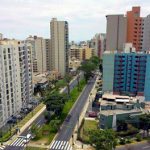
The central axis around which the growth of the formal real estate market in Lima, Peru, revolves is the implementation of a coherent set of government housing policies, established since 2001. A new phase of expansion in the construction economic cycle is reflected in the sudden surge of real estate interest in areas such as Jesús María, Magdalena del Mar, Pueblo Libre, and, to a lesser extent, Lince and Breña. However, it is already evident that the avalanche of investment opportunities in these districts has not been accompanied by an assessment of their environmental carrying capacity. It is highly likely, then, that the negative impacts of these investments will translate, in the short term, into new urban problems for Lima, requiring significant investments in public services. |
|
 |
The roof is the primary guarantee of environmental comfort for human beings. Besides serving as a crucial means of controlling thermal, light, and acoustic insulation and of protecting people from precipitation, it functionally and symbolically embodies the notion of a covering. This is why humans understand the concept of a roof through the roof itself, perceiving it as part of an additional skin that shields them from the harshness of the environment. This protection undoubtedly contributes to imbuing memories with thoughts, emotions, and feelings of serenity and security throughout life. | |
|
|
Business competitiveness and the increasing scale of construction projects in Peru’s formal real estate market are driving the continuous incorporation of new technologies and more advanced industrialized components in the construction sector. However, the design products of recent years do not yet seem to be aligned with what a growing supply of industrial components for construction would suggest. |
LA INDUSTRIALIZACIÓN DE LA CONSTRUCCIÓN Y EL DISEÑO ARQUITECTÓNICO |
 |
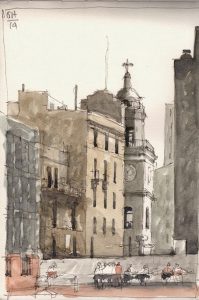
This article attempts a dispassionate comparison of the real estate offerings of three different markets: Bogotá, Santiago, and Lima, to confirm or refute the subjective perception that the supposed identity of Lima’s multi-family residential architecture is nothing more than the adaptation and reproduction of a menu of images that globalization provides through the homogeneity of its language and communication mechanisms. |
LA IDENTIDAD DE LA ARQUITECTURA RESIDENCIAL MULTIFAMILIAR CONTEMPORÁNEA EN LIMA |
 |
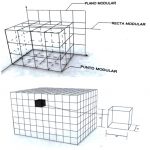
The following notes establish the principles of visual perception and their use as a methodological instrument for approaching the design problem of residential complexes and, more generally, the relationship between contemporary architecture and the city. This topic is of particular interest because Latin American modern architects address such problems by interpreting and adapting theories from contemporary psychology. These theories rely on Gestalt principles that operate in human beings to ensure a certain continuity of redundancy, which in turn protects us against the error of maladaptive environmental perception. However, the dangerous limitations of a perspective that embraces the notion that stimuli possess an inherent organization perceptible only to a passive subject will become evident. |
LA TEORÍA DE LA PERCEPCIÓN VISUAL EN EL DISEÑO DE CONJUNTOS HABITACIONALES |
 |
The challenge of this essay is to reconcile the paradigm of the creative impulse in architectural and urban design with neuroscientific findings regarding brain function. In this vein, it suggests a reevaluation of the concept of intentionality in the pursuit of environmental sustainability, as a result of thought that is not strictly rational. It is remarkable how, in recent decades, the environmental dimension has become consolidated in the design thinking of architecture and urban planning. Increasingly, designers’ perception that energy conservation, the use of renewable energy sources, the environmental impact of their projects, and respect for natural heritage, among other issues, play a predominant role in their rational design decisions. However, the origin of these initial design intentions, which, as discussed in this essay, do not stem exclusively from rational thought, has not yet been sufficiently explored. | LA TOMA DE DECISIONES DE DISEÑO ARQUITECTÓNICO CON CRITERIOS DE SOSTENIBILIDAD DESDE UNA ÓPTICA NEUROCIENTÍFICA |

 |
The academic debate over whether conceptual argumentation within the architectural design process can be considered research is still controversial. This discussion is connected to the historical Aristotelian split between poiesis (creation) and praxis (practice). The text proposes abduction as a methodological category to validate research in and through architectural design. Abduction, understood as a form of logical reasoning that formulates hypotheses without a claim to universality, serves as the initial engine (primum mobile) for creative production. Unlike deduction or induction, it allows explanation of little-studied phenomena and legitimizes the knowledge generated in the design process itself. | LA ABDUCCIÓN COMO CONCEPTO METODOLÓGICO EN LA INVESTIGACIÓN DEL PROCESO PROYECTUAL DE LA ARQUITECTURA |